Episode Transcript
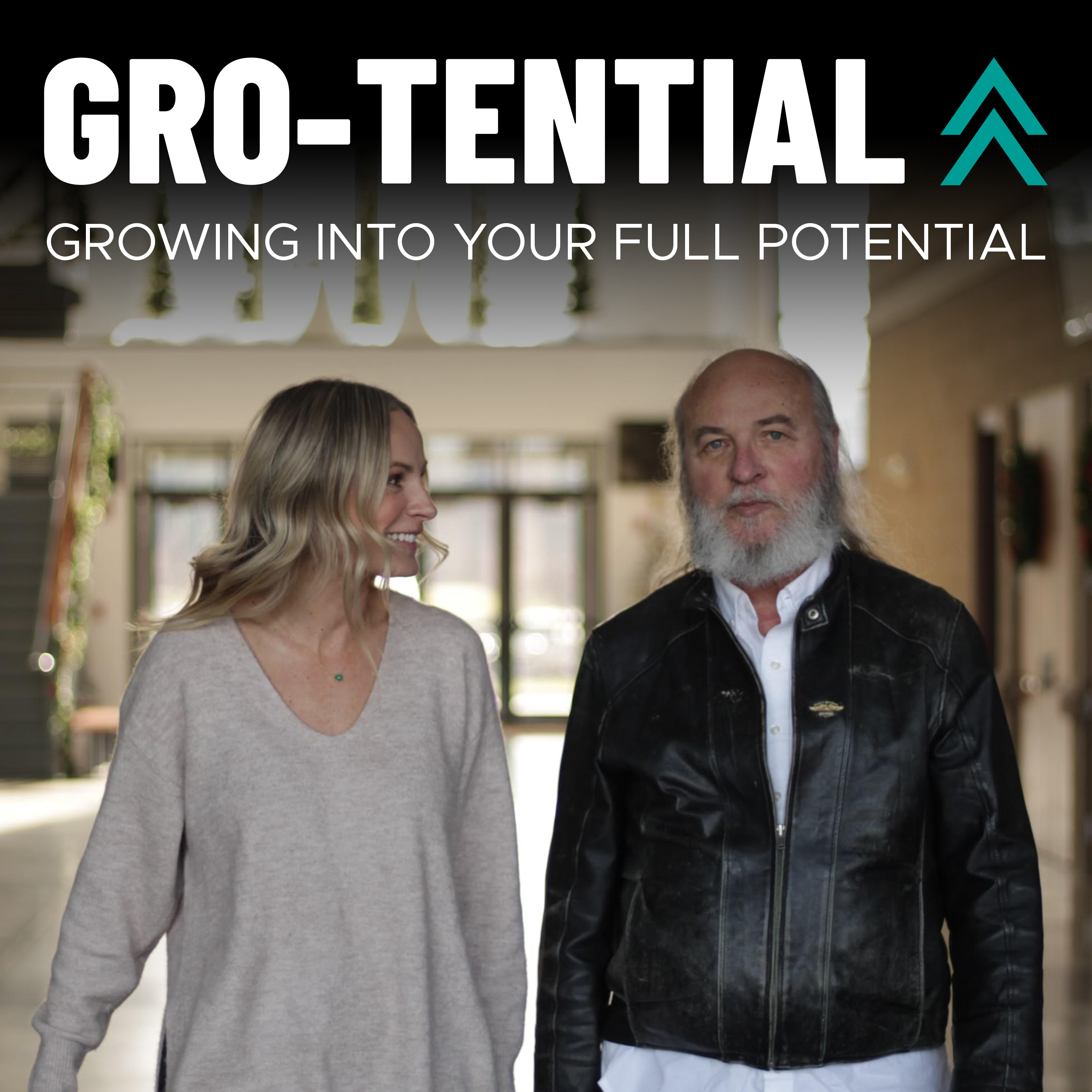
[00:00:05] Speaker A: Hey, welcome back to Grow Tential. I am Sarah, and I'm with my awesome, well dressed, wise, diligent dad. How you doing?
[00:00:15] Speaker B: I'm after that introduction, I'm a hundred times better than I was.
[00:00:19] Speaker A: My kids and I were just having a conversation about how cool you dress, that you have awesome style.
[00:00:25] Speaker B: Well, you have a sister who says I dress like a farmer.
[00:00:28] Speaker A: Which one?
[00:00:29] Speaker B: We won't out them today.
[00:00:31] Speaker A: I love outing the sisters. It makes me excited.
Okay. So we met about a month ago, and we are in this series for Atlas of the Heart, Brene Brown's book, and the idea of labeling emotions.
And the better you can label emotions, the better you can process and move forward in healthy ways.
How have you enjoyed this series, these conversations?
[00:00:59] Speaker B: I like emotional intelligence.
[00:01:03] Speaker A: Yeah.
Eq.
[00:01:05] Speaker B: But I'm not. It isn't.
It doesn't come to me naturally.
[00:01:10] Speaker A: Yeah.
[00:01:11] Speaker B: So I love her definitions of emotions.
I find it very helpful.
[00:01:18] Speaker A: Yeah.
I think one of the needs in life is this idea of hope.
Hope is a beautiful thing because when you feel it, you feel, I don't know, unstoppable.
I remember being a little girl and you having the phrases, you know, I'm a man of steel, or nothing gets me down. Or even today you'll say, I've never been sick, sick a day in my life. And you normally only say it when you are sick.
But you've always led our family really well with hope, and you've always led the church really well with hope.
But what we learn in Brene Brown's book is hope is only forged in the bad, in struggle. Yeah. And so I want to talk a little bit about hope today, but to get there, I think we have to talk a little bit about the struggle. Yes, we're.
This is like a. I think I know the answer to this, but when you were younger and even into your 20s, 30s, 40s, actually, all the way through, did you ever feel like you could express emotions the way you wanted to express emotions?
[00:02:39] Speaker B: I would say no.
First of all, I couldn't label many of my emotions.
[00:02:48] Speaker A: Yeah, they all kind of came out.
[00:02:50] Speaker B: So everything was. Everything got blended into grouchy.
[00:02:57] Speaker A: Yeah. I think that's pretty typical of men, though.
[00:02:59] Speaker B: Yeah. Everything got blended into grouchy.
[00:03:01] Speaker A: And maybe women in perimenopause, dare I say, is that too much information for this podcast?
[00:03:11] Speaker B: What is in your coffee today?
[00:03:14] Speaker A: We were just laughing because my mom was singing some song and I said, I don't know what's in your coffee, but what's going on with mom? Over there, she's pure joy.
But yeah, I do. I think that is very, very normal for when you don't know how to express. It all comes out as the major emotion of anger or grouchy or short tempered.
But as I think about it, I'm sure I had permission to feel, but I think something inside of me just wouldn't allow it.
And so when I think about sadness, even as an adult, I hate being sad. And so I always would try to fake it or push it down or put the mask on or whatever it is rather than feeling it.
And the older I get, the more I hate that, the more I want to be the author of my life. Dad, what is that authentic? Yeah, the authentic me. And so that means the God given emotions that we deal with.
And so I think for sadness or grief or. Or whatever came in this chapter, despair, those are emotions that I have definitely stayed away from because I'm the fun one. I am the lifter of the room. And so to ever share sadness has never been easy for me. It's. I don't call my mom and say I'm sad, or I don't call my sisters and say I need help. It's. I stay away from it.
But it's not healthy.
[00:04:56] Speaker B: No.
Because sadness is in fact a motivator sometimes to make changes we wouldn't otherwise make.
[00:05:09] Speaker A: Yeah. So tell me, tell me. Let's put it into context then.
When is one of the last times you felt truly sad?
He hates these questions, by the way.
[00:05:28] Speaker B: I would say what comes first to my mind is the day that Shay had her stroke.
[00:05:38] Speaker A: Yeah.
[00:05:38] Speaker B: And I watched them put her on the life flight.
[00:05:44] Speaker A: Yeah.
[00:05:45] Speaker B: And fly her to the clinic.
I was pretty sad.
[00:05:55] Speaker A: I.
Stories coming to my head. And I might be getting this wrong.
We might have been. A woman saw our family in the waiting room, and I don't know who this woman is. I can't remember quite the story, but she saw the way we prayed and we huddled together.
So my mom had a stroke two years ago now. And by the grace of God, you would never know. She's perfect in every way.
[00:06:25] Speaker B: Full recovery.
[00:06:26] Speaker A: Yeah.
But we. So we somehow. Her phone called me. She wasn't even trying to call me. She was trying to call another sister.
And by the grace of God, I picked up, which is very rare, uh, just to have my phone next to me. But I.
She called and she told me she couldn't move her arm.
And so I hopped in the car. I didn't even have shoes. I think Lex threw shoes through the window of the car as I was driving out. And I called 91 1.
And I.
We lived. At the time, he lived on the other side of Medina. And getting through Medina Square is actual hell. I mean, it is.
Tear your eyes out. When you. When I was. I remember I called Jacob because you and Jacob were together.
[00:07:20] Speaker B: We were in an elder meeting.
[00:07:21] Speaker A: You were at the church in an elder meeting. And I called Jacob, let him know that you and him needed to meet us at the hospital as like now.
And I called mom back, and I couldn't get her to answer the phone. And it was like sheer panic. Sheer panic.
And by the time I got there, the ambulance had arrived first.
And I drove behind her, and I could see her face the whole entire time. But they had a mask on her. They put a mask on her.
And then we got to the hospital and all the sisters came and we all prayed together.
And we got in a circle and prayed. And I think Jacob was there at the time, but someone was in the reading room and saw it. And it said. She told me it actually turned her closer to God in that moment.
[00:08:14] Speaker B: That's beautiful, isn't it?
[00:08:15] Speaker A: I don't think I ever told you guys that.
[00:08:17] Speaker B: I don't think I heard that.
[00:08:18] Speaker A: The way our family responded in that. The way she saw us trusting in God, it made her want to trust in God in that kind of way. Isn't that awesome?
[00:08:26] Speaker B: That's beautiful.
[00:08:27] Speaker A: Okay, so.
So what was your emotion, dad? You get to the hospital, You're.
We. It was you and I back in the room with Mom. She pulled down the mask, and we could see that her face had drooped on one side.
And I remember just locking eyes with you like it's a stroke.
And what was your.
[00:08:51] Speaker B: Well, yeah, I mean, it's. It's the way I feel. Sadness is like an emptiness.
Do you know what I mean?
[00:09:02] Speaker A: Yeah.
[00:09:05] Speaker B: And I just remember saying to God, I've trusted you my whole life, and now I have to trust you more than I've ever trusted you.
[00:09:26] Speaker A: Yeah.
[00:09:26] Speaker B: Would you please help us?
[00:09:28] Speaker A: Was it in your sermon last week, this idea of trust?
I consume so much content that sometimes I have no idea where I got it from. But the idea of trust is I'm trusting you with what I love most.
[00:09:47] Speaker B: I feel. What I love most, I feel is safe with you.
That is the meaning of trust.
[00:09:53] Speaker A: Say it one more time.
[00:09:54] Speaker B: What I value the most, I feel is safe with you.
[00:09:58] Speaker A: I.
[00:10:00] Speaker B: That's a good definition for trust.
[00:10:01] Speaker A: Well, and it's a good litmus test of Are you trusting God or are you not?
[00:10:09] Speaker B: Yeah.
[00:10:09] Speaker A: And.
And I remember there were a lot of motions in those couple days. You came home and you had dinner with us that night, and I think we cried together. And I think I slept my.
I think actually Jacob and I stayed in Cleveland that night because we didn't want to be far.
I wouldn't.
I wanted to be right there next to the hospital. And we weren't allowed to spend the night because she was in the icu. So I think Jacob and I stayed at our good friend the freezes and so we could be right there.
Makes me sad because I'm just so thankful to God.
[00:10:48] Speaker B: So am I. Thank you, Father.
[00:10:50] Speaker A: So thankful. And I'm looking at my mom sitting across from me.
Okay, so sadness.
She has this idea that it's like a. It's a self check. Right. I'm not saying it right, but it's the idea of.
It can guide you into.
[00:11:07] Speaker B: Yes.
[00:11:08] Speaker A: Better thinking.
[00:11:10] Speaker B: If I allow sadness to work the way it's supposed to, it can motivate me to make changes I need to make.
[00:11:18] Speaker A: Yeah.
[00:11:20] Speaker B: It can motivate me to reconsider my connections to others.
[00:11:26] Speaker A: So. So let's put it in this context of Mom.
Did. Did that help you? Did that help motivate you in a different way of loving her? Or did that help you see things in a way you hadn't seen them before?
[00:11:45] Speaker B: It made me want to. It made me want to not take her for granted.
[00:11:49] Speaker A: Yeah.
[00:11:50] Speaker B: It made me want to.
It made me want to say to God, I won't.
I treasure Shay.
I will not take her for granted.
[00:12:09] Speaker A: I heard you say, I want to go on adventures with my best friend. You said that to me the last time you guys snuck away for a couple days. Is that a little bit more important to you now than it's ever been?
[00:12:20] Speaker B: Yes, I think it is.
We went for a little adventure yesterday.
We mustn't assume that things will always be the way they are now.
[00:12:37] Speaker A: Yeah.
[00:12:38] Speaker B: And we have to. We have to.
We have to live life to its fullest, day by day.
[00:12:46] Speaker A: Yeah. It's interesting when you say that, because I think of.
That's an easy thought for me because I'm a worse first. Like, I think we've talked about this in podcasts before is my mind goes to.
If it's. If it's a possibility of bad, that's where my mind goes.
Um, but I think in this idea of sadness, there is a difference between sadness and despair.
[00:13:10] Speaker B: Yes.
[00:13:10] Speaker A: And despair is. It can be a deep, hopelessness and the idea of permanence is you ask yourself, will it always be like this?
What are your thoughts on despair versus sadness?
[00:13:27] Speaker B: So despair doesn't produce anything healthy.
Despair is processing life and giving up on the idea of change. Nothing is ever going to change. It's always going to be like this.
There's nothing I can do about this.
And that does not produce a better tomorrow.
[00:13:58] Speaker A: And so when we move from.
Okay, so sadness is a helpful tool. It can help you reorient. It can help you. What is. What is her? She had a couple of ways that it helps you. Most people who are in a state of sadness, they can see things without judgment or with better judgment. What are those things are you.
[00:14:24] Speaker B: You have. When you're. When you're sad, you tend to have less errors in your judgment, which is funny.
[00:14:33] Speaker A: You would not think that.
[00:14:34] Speaker B: Yeah.
And she also said that you are more resistant to eyewitness distortions.
You know, we all see a car accident and we see it three different ways.
[00:14:50] Speaker A: Yeah.
[00:14:51] Speaker B: Well, if you're sad, you tend to see it more realistically.
[00:14:55] Speaker A: Yeah.
[00:14:58] Speaker B: She says also that you're more sensitive to social norms and you tend to be more generous.
[00:15:07] Speaker A: Okay. She also says, though, this idea of leaning on people when you're sad, what was her. What was that concept, dad? That.
[00:15:17] Speaker B: Yeah.
It challenges us to think about our connections to other people.
When I'm sad, I'm very open to thinking about how am I connected to other people.
Evidently, the best way to respond to somebody in sadness is to help them to have a sense that you see their sadness.
[00:15:48] Speaker A: Right. You're not there to fix it, but you see them.
[00:15:51] Speaker B: Yeah.
[00:15:51] Speaker A: Yeah. I love that idea because I think so many of us try to fix it.
[00:15:55] Speaker B: Yeah.
[00:15:57] Speaker A: I think it's in this one, in this chapter where she talks about her kids and helping them understand this and go through this.
[00:16:05] Speaker B: Yes.
[00:16:05] Speaker A: And it's one thing when it's you, but it's a whole other ball game when it's your baby in front of you.
And how she urges us to. To allow them to go through this process and not try to fix it for them.
Because hope is forged.
[00:16:26] Speaker B: Yes.
[00:16:26] Speaker A: Okay. So. So we're sadness. We've experienced loss. We've experienced some sort of pain.
How do we move forward in the kind of way that brings about true hope?
[00:16:44] Speaker B: Well, I like the.
Brene Brown cites the research of CR Snyder.
[00:16:58] Speaker A: Yeah.
[00:16:59] Speaker B: And he's got these three great concepts about hope.
The first thing he says is.
[00:17:10] Speaker A: When.
[00:17:12] Speaker B: We experience hope, when we can set realistic goals.
[00:17:18] Speaker A: Yeah.
[00:17:19] Speaker B: And he Puts a sentence with that, I know where I want to go.
[00:17:26] Speaker A: Wasn't her study that she had studied so many thousands of people that were taking this course, and she would ask them to write a goal, and 90% of them wrote unrealistic goals.
[00:17:39] Speaker B: Yeah.
[00:17:40] Speaker A: Okay, so this is something that I think two things about. One, I think sometimes setting goals very high means that you will reach higher than you ever thought you could. So I think that's good. But then I feel like I am. I'm going for the ordination process right now, and I'm trying to write a theses for each book of the Bible. And I'm extremely frustrated because I was supposed to be done by January, and I just read, looked at it to see when I'll be done, and it's most likely June.
And so I thought I would be so much farther than I am because I read the Bible every year. So it just made sense to me. But when you're studying in that way, it's not the same. And so. So unrealistic goals are something I'm pretty good at setting. So you've.
[00:18:35] Speaker B: Or perhaps there is a difference, Sari, between a high goal and an unrealistic goal.
So we want to set high goals, but they have to have the qualities of realism. And sometimes it's not the goal that's wrong, it's the pathway to achieve the goal.
So the goal to get this done by a certain date, that's a good thing.
[00:19:07] Speaker A: Yeah.
[00:19:07] Speaker B: All right, but do you have a realistic pathway to accomplish that goal?
[00:19:15] Speaker A: Okay, so what would that look like? What would writing goals with a realistic pathway look like?
[00:19:22] Speaker B: All right, if I'm going to do this. Okay, let's just use the thesis statement. If I'm going to be done, then that means I have to do this many thesis statements a month.
[00:19:39] Speaker A: Yeah.
[00:19:40] Speaker B: All right, now can I look at my schedule and say I can put blocks of time in that guarantees I can get that done? Or when I look at my schedule, I say I cannot get enough blocks of time in.
So the goal is good. The pathway has to be changed.
[00:20:00] Speaker A: Yeah. Okay, so as far as hope goes, then. So I'm setting a realistic goal. What did he say? He put a line with that. Can you repeat that line?
[00:20:09] Speaker B: The line is, I know where I want to go.
[00:20:12] Speaker A: I know where I want to go. And that's where hope comes in.
[00:20:15] Speaker B: Yeah. Hope thrives when I look into the future and say, I know where I want to go.
[00:20:23] Speaker A: So I am feeling a loss.
Okay. I think I talked about in our last podcast My kids, I'm pretty much an empty nester right now.
They're pretty much gone Monday through Friday, and then they all come home on the weekend, so it's total chaos. But Monday through Thursday is lonely. And so it feels like a loss. It feels like a loss of something I love. So.
So I'm looking forward now, and I. I'm going to say, okay, I want to create a goal that will help me.
What?
[00:20:59] Speaker B: Yeah. Where do I want to go? Not okay, you're. You're in your 40s. Okay. What do you want your life to look like when you're 50?
What would you like your life to look like when you're 60?
What are some of the things that you have the opportunity to do now that you haven't had the opportunity to do in the past?
[00:21:19] Speaker A: Yeah, I got a puppy.
[00:21:23] Speaker B: Yes. A beautiful one to boot.
[00:21:25] Speaker A: I just stole all my freedom.
Yeah, she's beautiful. I love her.
[00:21:31] Speaker B: Okay. So it's no different.
Okay. I'll be 72 next month.
All right. But I'm sure I'll live another five years.
So it's no different saying, what do I want my life to look like in five years than it was when I was 25? And saying, what do I want my life to look like in five years now? The things change, but the process is the same.
[00:21:58] Speaker A: The process is the same. So you're looking ahead. What's the next one?
[00:22:02] Speaker B: He says, Dan, a pathway.
I not only know where I want to go, I have an idea how to get there.
I not only have an idea how to get there, I'm developing the quality of persistence.
And if my first run at this doesn't work, I'm going to change my pathway. I'm going to persist.
There is a way forward.
[00:22:31] Speaker A: I can see as you're saying this. I could see if you're.
Maybe you've had a financial loss or you're struggling financially, I can see how a pathway forward would drastically create hope.
[00:22:45] Speaker B: It's called a budget.
Write a budget.
[00:22:48] Speaker A: Yeah, well, Jacob and I, we're trying to.
Our dream is to have a piece of property that all the kids could build on one day.
It's a big dream. It's a generational dream. And it's something our heart desires big time.
And that creates hope for me in a huge way, because how beautiful would life be if my grandbabies could just walk over to my house? Doesn't that sound so fun?
[00:23:16] Speaker B: Yes, it does.
[00:23:17] Speaker A: But. Yeah. So we're in budget zone right now of, okay, how much money Will that cost? How much money do I have to save every single month? And it's exciting to me. It's. I'm like.
[00:23:28] Speaker B: I mean, hope you're feeling hope.
[00:23:29] Speaker A: I'm going to try to put more in than I said I needed to put in. And so trying to find ways to save money here and there so it can go straight into the.
The Burger Homestead fund, but yes. Okay, I love this. Keep going. What's next?
[00:23:45] Speaker B: All right, then the last piece, according to Snyder's research, is I have a sense of competence.
I have a sense that I can do this.
I know where I want to go. I have some idea how to get there.
I have the quality of persistence, and I feel competent that I can do this.
[00:24:13] Speaker A: Okay, so I guess that leads me then, to what if you don't feel competent? Does 1 and 2 lead you to feeling more competent? Is that the idea?
[00:24:26] Speaker B: Or then maybe if I don't feel confident, I need to start asking myself, what do I have to do to become confident?
But I'm still in. Okay. Hope is still driving change, Right?
[00:24:38] Speaker A: A million percent.
[00:24:39] Speaker B: I'm moving toward a preferred future. I'm not drifting through life.
I'm thinking about my schedule and about my.
My energy. And I'm looking at myself and saying, what do you have to do to be competent to do this?
So I used to do this, Sarah. I would say I want the church to be this size, and if it's going to be this size, I have to be competent to lead a church.
[00:25:14] Speaker A: Of this size and get the right leaders around you. Yeah.
[00:25:17] Speaker B: So what do I have to do to improve my competence as a leader?
[00:25:22] Speaker A: Yeah.
[00:25:22] Speaker B: So I would go to seminars. I would read leadership books, all to make myself competent for goals that I was setting.
[00:25:34] Speaker A: Yeah.
That's good.
So I'm thinking.
I'm thinking it came and went. I can't remember the thought I had. But when you think about this competency piece of when I'm truly sad, Dad, I want to isolate.
And there has to be something that helps us dig from that isolation.
So can you.
Do you relate to that? Do you want to isolate? When you. Do you ever want to isolate?
[00:26:13] Speaker B: Not a big isolator.
What I want to do is I want to do the thing I can do right now to get back on track.
[00:26:26] Speaker A: All right? See, I don't always. It takes me a minute to get there.
Like when I feel blue or down, I want to talk on the phone. I don't want to be around people. I want a comfy blanket and some sweatpants.
Can I get an amen out there in the audience?
So these ideas feel awesome to me, but it feels like I wouldn't get there right away. It feels like you almost have to give yourself permission to feel this sadness.
And so in the permission to feel it, how do you know when the right time is to start looking at this?
Is that question understandable?
[00:27:13] Speaker B: I'm going to answer it in a different way because I'm not really sure.
So I will say, okay, you can be grouchy about this for the rest of the day.
[00:27:32] Speaker A: You give yourself the timeline. Yeah.
[00:27:33] Speaker B: But tomorrow you're done. Yeah, I'm done with this.
[00:27:36] Speaker A: Move on.
[00:27:39] Speaker B: I'm gonna acknowledge this for the next hour, but then I'm done. This is not gonna set my agenda.
[00:27:46] Speaker A: And I do wanna differentiate. Sadness is different than grief. And maybe we could do our next podcast on grief.
[00:27:52] Speaker B: We could do that.
[00:27:53] Speaker A: Because there are losses in life that are so painful. Setting the timer is not going to work. And you have to go through things differently. But sadness for me and for many people are things that we can overcome. It is maybe it's like the loss of whatever goal or dream or the loss. And so you're reframing your mind to look ahead to have this hope.
So our next podcast will do on grief. Does that sound good?
[00:28:20] Speaker B: That sounds good.
[00:28:23] Speaker A: As you have lived your life and learned along the way, God has been the most loving, gracious father. And I know that because I know you.
What would you say to somebody who's in this sadness listening to this and wanting hope?
When it comes to going to a God like we have?
[00:28:59] Speaker B: Joy is innate to the divine nature.
God is eternally blessed. He enjoys being God.
He enjoys his existence.
[00:29:15] Speaker A: Ah.
[00:29:16] Speaker B: And then the psalmist tells us, the joy of the Lord is our strength.
Ah. I'm sure you remember we used to say, move to the joy.
[00:29:27] Speaker A: Yeah.
[00:29:29] Speaker B: So it has to be a conscious act.
Now, again, you're right. We are separating sadness and grief.
[00:29:36] Speaker A: Yeah.
[00:29:37] Speaker B: But in sadness, it has to be a conscious act.
I'm moving toward the things that inspire hope in me.
I'm moving toward the things that call out the best in me.
I am acknowledging this moment of sadness, but I'm moving toward the God of all joy, the God of all peace.
These are qualities that are innate to his nature, and he shares them with us.
[00:30:15] Speaker A: Yeah.
You are doing a sermon series right now on the attributes of God, the moral attributes of God. And the idea is, the better you know who God is, the more in love with him we become.
[00:30:30] Speaker B: Right.
[00:30:30] Speaker A: And Lex and I are working on a sermon series that was her idea that we're going to be doing at midweek that partners so beautifully with yours is in the Westminster Confession or Catechism, it says the chief end of man is to glorify God and enjoy him forever.
And so we're going to be looking at, if we exist to glorify God and enjoy him, then what is it and how do you do it? And so I would highly recommend these two sermon series.
If you are a part of Christchurch or if you're not, I highly recommend them because I think the more you know about God, it's inescapable how much you love him.
[00:31:15] Speaker B: Yeah.
[00:31:15] Speaker A: And if our chief end is to glorify him and enjoy him, then what does that mean and how do you do it?
Thank you for this. I think it's uncomfortable to talk about vulnerable things, but I think it is the part of humanity that we need to connect in deeper, richer ways, that our emotions are a part of who we are. And there is a reality of sadness and despair, but there is beauty in hope. And using sadness, not pushing it down or putting the mask on, but using it to guide you into a healthier future.
Thanks for your wisdom and thanks for understanding.
[00:31:54] Speaker B: Good conversation.
[00:31:55] Speaker A: I love you.
[00:31:55] Speaker B: I love you.
[00:31:56] Speaker A: My best friend and I'm your favorite daughter.
We heard it here first, folks.
Have a great week.
You did not.
[00:32:07] Speaker B: If you like it.