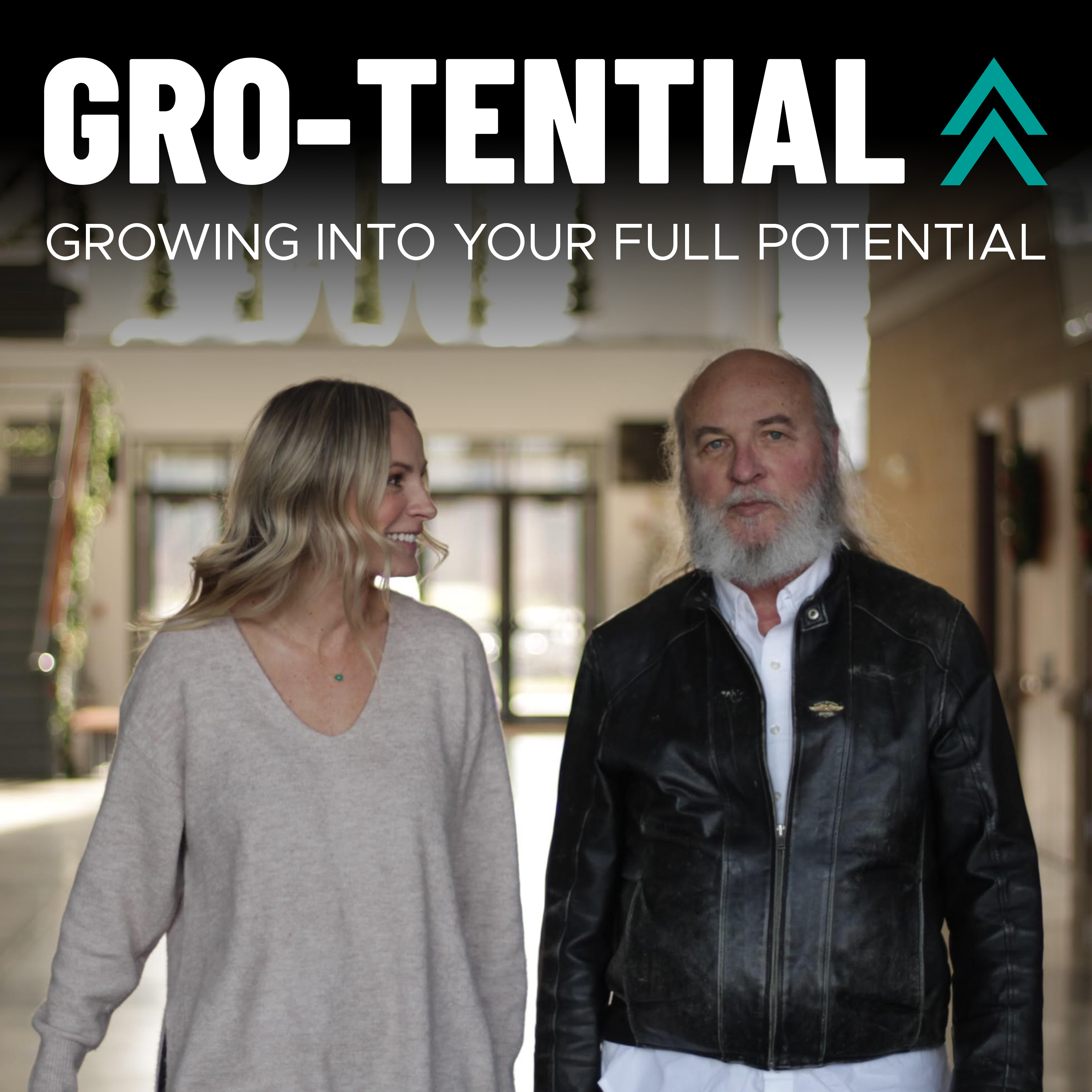
Episode Transcript
[00:00:02] Speaker A: Hey, welcome back to Grow Tension. I'm Sarah and I'm with my awesome dad.
[00:00:08] Speaker B: And I'm with the party girl, the big vacation girl.
[00:00:12] Speaker A: Yeah, I did a extended time away this summer, which my Tay Rose got married.
She's been married about a month now.
We had a fun wedding. Did you enjoy the wedding?
[00:00:25] Speaker B: I had a delightful time.
[00:00:27] Speaker A: Yeah. I got a great picture of you. I'll have to send it your way.
And then I'm calling it the Summer of Love at the Burger household because Chrissy, my baby, he's getting married next summer. So we did the engagement party.
We had about 70 people over at the house this weekend.
[00:00:42] Speaker B: It felt like 170.
[00:00:44] Speaker A: Yeah, you should have seen the cul de sac. Just full. But it was delightful. How are you? How was your time away?
[00:00:51] Speaker B: Delightful.
[00:00:52] Speaker A: Okay, what was your favorite part of summer?
[00:00:56] Speaker B: We drove over to the Five Finger Lakes.
[00:00:59] Speaker A: Yeah.
[00:01:00] Speaker B: And then.
[00:01:02] Speaker A: Who's that? Just you and mom or.
[00:01:04] Speaker B: And Justin and Crystal and Calder, my sister. And then we drove over. Justin and I drove to the Baseball hall of Fame.
[00:01:13] Speaker A: So fun. So fun.
[00:01:14] Speaker B: Someplace I've wanted to go for a long time.
[00:01:16] Speaker A: And did you get to see Jay there?
[00:01:18] Speaker B: Yeah, he came and met us.
[00:01:19] Speaker A: That's my brother Jay. He lives in Vermont.
So we all live within like a five minute radius of each other. And then Jay's in Vermont, so it's fun that you can sneak away and see him.
[00:01:29] Speaker B: Yeah.
[00:01:29] Speaker A: Good.
Well, today on Grow Tension, we are going to be talking about this idea of how God has given us emotions.
But there can be maturity in understanding our emotions. That can be a game changer for yourself and for relationships. I find.
[00:01:46] Speaker B: Yes.
[00:01:46] Speaker A: I think that one of the. The gifts of emotions is when you can clearly understand it. It can help you understand yourself better and then find solutions on how to, I don't know, be healthier or happier or whatever that might lead to. How are you with emotions?
[00:02:06] Speaker B: Well, I've often characterized myself as having emotional. Emotional disabilities.
[00:02:16] Speaker A: Yeah. Yeah.
[00:02:20] Speaker B: Which is why I appreciated Brene Brown's book where she labels and defines all these emotions.
[00:02:31] Speaker A: Yeah. So it's the Atlas of the Heart by Brene Brown. So we're going to be using that as kind of a. She calls it what, a map.
A map of words and how to understand and having kind of the same language wrapped around.
But I. I listen to the book, so I'm. I'm excited to digest it a little bit with you and talk a little more about it.
I feel like in relationships and as I've grown up, I think Maturity helps with your emotions along the way.
So for me, I think I was probably a little irrational. You know, like, everything felt a little bigger than it needed to feel.
And as I've matured, I've been able to slow those emotions down a little bit and digest them better.
But so many people, there's so many, I don't know, like, ways that we clump these emotions together that maybe don't feel the most helpful if we don't really clearly know how to define them. And I think for a lot of people, anxiety is one of those where you. You just kind of feel anxious all the time, but you don't really know how to define it or what it is, or is it stress? Is it overwhelmed? And we kind of clump it all into this idea of anxiety.
So do you struggle with feelings of anxiety at all? I know you're pretty even keel, but, like, what does anxiety look like for you?
[00:03:59] Speaker B: Yeah, so for me, I am.
I want to get on the issue right now.
[00:04:09] Speaker A: Yeah.
[00:04:11] Speaker B: So if I feel anxious about something, I don't.
I don't. It doesn't sit there.
[00:04:17] Speaker A: It's like the delay makes you anxious. Is that what you're saying?
[00:04:22] Speaker B: So I deal with anxiety by. Okay, we're problem solving now. We're going right at it.
We're going to run at this. We're going to figure it out, we're going to fix it.
[00:04:34] Speaker A: Yeah, I probably take after you because I think one of the things that makes me anxious is not being able, like having to wait or I know the conversation's happening and I just want it to happen now. Or that might be my patience level, too.
Zero patience.
Okay, so how does Brene Brown define that anxiety? Do you want to read that definition to us?
[00:05:02] Speaker B: So basically, she says there's two things about anxiety.
It can be a state that you are in. You are in an anxious state, or it can be a personality trait that you're given to it.
And she said emotional anxiety feels like the escalating loss of control.
Worst case scenario, thinking we have the joke in our family. Worst first. Worst first.
[00:05:37] Speaker A: Yeah, I definitely. The worry and the worst first thoughts. That is a problem.
[00:05:42] Speaker B: And she says a sense of total uncertainty.
So if a person can.
I've learned that you can't sink beyond the level of your vocabulary.
[00:05:58] Speaker A: Right.
Describe that, though. Like, what do you mean?
[00:06:01] Speaker B: So if you.
So I learned this through theology and trying to think about God.
You can't think ideas about God that you can't put words with.
[00:06:16] Speaker A: Right. Like, you can't Think higher than you know.
[00:06:19] Speaker B: Yeah.
So if I'm gonna think about God in his majesty, then there have to be some words attached to that, like almighty, like everlasting.
And if I can identify those words, then I can think about God as an everlasting being.
Ah, well, the same thing is true in everything and especially in emotions, because we feel something that we often don't have the vocabulary to even talk to somebody about. How are you feeling? And we don't have the vocabulary to say.
[00:07:02] Speaker A: Right. And I think this is probably one of the most game changers for Jacob and I in our ways of communicating, because it would seem 90% of relationships, it's like communication, communication, communication.
But it would be hard to articulate our little Sila or my granddaughter, your great granddaughter.
[00:07:21] Speaker B: We love her.
[00:07:22] Speaker A: She's filming with us today. We're very family oriented, so we like to be comfortable and we like to be in our homes when we film. So there's always going to be a little bit of background noise, just who we are.
[00:07:32] Speaker B: We are a family friendly staff too.
[00:07:35] Speaker A: We are.
Okay. Anyway, so, yeah, I felt. I feel like when Jacob and I could start to articulate how we were actually feeling and the emotions we were going through, we started to be able to understand each other so much better. And then our relationship got healthier.
[00:07:51] Speaker B: Yeah.
[00:07:52] Speaker A: Okay, so let's say that you are feeling anxious and maybe you are in a relationship or maybe it's just for you personally.
What are some indicators of how you start to label that anxiety?
So I didn't ask that. Great. Not what are indicators, but how do you start to say, okay, this is really what it is? Does that make sense?
[00:08:19] Speaker B: Right.
I find somebody that can help me define the terms.
[00:08:28] Speaker A: So we got the book Atlas of the Heart.
[00:08:30] Speaker B: So I've got a book now, and there are realistic definitions.
So there's a difference between being worried and being anxious.
[00:08:45] Speaker A: Yeah.
But we clump it together.
[00:08:47] Speaker B: But we clump it together.
[00:08:48] Speaker A: Yeah.
[00:08:49] Speaker B: So with the right definitions, I can start saying, this is really not worry, this is anxiety.
[00:08:58] Speaker A: Ah.
[00:09:00] Speaker B: This is me anticipating the worst.
[00:09:05] Speaker A: Yeah.
[00:09:06] Speaker B: And why am I doing that?
Do I have any reason to anticipate the worst other than I've just permitted myself to think that way?
[00:09:15] Speaker A: Yeah. And I think especially with worry and anticipating the worst later on. In her book, she talks about the foreboding joy of like, you're looking at your children, but then you're afraid something's gonna happen to them. So now the joy is replaced by fear. And we should definitely do a podcast on that. Because I think that is for a lot of people.
But this worry hits it of.
We. We tend to rob ourselves of what we're in right now because we're worried about something that you can't control. Or if you can control it, it's like, okay, then let's get to work. But we rob ourselves.
So if someone is in that season of worry, like worrying about what's next or worrying about what's coming up, do you have any tips or tricks in your life with God that have been helpful for you about maybe replacing the worry or telling yourself the truth or what are some good tools that you've had in your tool belt?
[00:10:17] Speaker B: Okay, let's.
Let's use anxiety because it's a bigger.
Sure, it's a bigger concept, people. Yeah.
[00:10:27] Speaker A: Everyone knows the feeling.
[00:10:28] Speaker B: Yeah.
[00:10:29] Speaker A: Yeah.
[00:10:33] Speaker B: Well, the scriptures say to us, be anxious for nothing.
All right? So instead of allowing myself to have this anxious mental flow, this anxious self talk, we interrupt that by doing what he said, Be anxious for nothing. But in all things, by prayer and supplication, with thanksgiving, let your requests be made known to God. All right?
I stop talking to myself in an anxious way.
I start saying, oh, this is out of control.
Oh, this is gonna be worse than I thought.
Okay? And I interrupt that thinking and I replace it by praying and saying to God, this is where I am and I don't have. This is important to me, and I don't have a sense that I have a good control over it.
[00:11:32] Speaker A: Yeah, I like the idea of stop talking to yourself and start talking to God because he can actually do something about it. And I think prayer is one of those great indicators of the healthier we are, the more we seek God. You know what I mean? And so even in our unhealth, the more we seek God, the healthier we become.
And so asking him for his input or even just getting it out of your head into.
[00:12:04] Speaker B: Just changing the thought loop. Yeah, the anxious thought loop that you get stuck in.
[00:12:10] Speaker A: Yeah.
[00:12:10] Speaker B: And then the anxiety because you are repeating the anxious thought to yourself.
[00:12:16] Speaker A: Yeah.
[00:12:16] Speaker B: It escalates.
And if you can just interrupt that and change the conversation and start talking to God about the reality of it instead of repeating the anxious thoughts to yourself.
[00:12:35] Speaker A: Right. So it says by prayer and supplication. Can you define supplication request?
So we go to prayer and then we make our requests.
[00:12:44] Speaker B: Right.
[00:12:45] Speaker A: And then with thanksgiving. That's what I was going to say. This idea of thanksgiving, I'm doing my theses in for ordination studies and praise to God is Everywhere in Scripture.
[00:12:58] Speaker B: Yes, it is.
[00:12:58] Speaker A: It is everywhere. And I think it is a state of mind that can help us be healthy in every aspect of our life. Like, the psalms are full of lament but praise. Lament but praise. Like, it almost always starts with something heavy, but it's ending with the praise of who God is or what he will do, or it's just. It's a beautiful idea. And so I think that is something to focus on in such a heavy, heavy way.
[00:13:31] Speaker B: Yes.
[00:13:31] Speaker A: Do you have gratitude thoughts or thankful? Do you have rhythms of that in your life?
[00:13:39] Speaker B: I, you know, that I talked about a couple of weeks ago, praying in a more mature way.
[00:13:50] Speaker A: Do you remember the title of that sermon?
[00:13:54] Speaker B: Yeah, I think it was called Mature Prayer.
[00:14:01] Speaker A: Kept it easy.
[00:14:01] Speaker B: Good man from Ephesians.
[00:14:05] Speaker A: Yeah.
[00:14:06] Speaker B: So I find in my prayer life, the more the. The farther, the more I grow with God.
I find myself asking for less and praising and giving thanks more.
And I also find that I.
I have a deeper appreciation. I say this to God sometimes.
I'm not here to ask for anything.
I just want to hang around in your presence for a few minutes.
[00:14:44] Speaker A: Yeah.
[00:14:46] Speaker B: I'm not gonna. I'm not asking for anything.
[00:14:49] Speaker A: Yeah.
[00:14:49] Speaker B: I'm not seeking anything. I just want to sit in your presence for a few minutes.
[00:14:54] Speaker A: Yeah.
One of my favorite things to do that.
[00:15:00] Speaker B: That's prayer.
[00:15:01] Speaker A: Yeah.
[00:15:01] Speaker B: Do you know what I mean?
[00:15:02] Speaker A: It is.
[00:15:03] Speaker B: And I come away from that kind of prayer much better than the kind of prayer where I've spent 30 minutes going through my prayer list, bombarding God with my grocery shopping list as if.
[00:15:17] Speaker A: He doesn't already know. Yeah. Which it is important to say. Still pray like that. There's nothing wrong.
[00:15:23] Speaker B: Nothing wrong.
[00:15:25] Speaker A: I heard someone say. And I'm sorry, I don't remember who, but they said, the.
The wrecking ball to your anxiety and stress is praise and thanksgiving to God. And it's like a wrecking ball. And so one of the things that I do try to do is wake up, and the first things on my lips or the first things in my mind be prayer and thanksgiving to God. Just thanking him for who he is.
[00:15:47] Speaker B: Yeah.
[00:15:48] Speaker A: And it sets a different kind of tone.
[00:15:51] Speaker B: Oh, give thanks to the Lord, for He is good, for his steadfast love endures forever.
[00:15:57] Speaker A: Amen. Amen. Yeah. The. The last half of Psalms is all those praise and Thanksgiving. Psalms 150s.
[00:16:05] Speaker B: Yeah.
[00:16:06] Speaker A: Good, good, good. Okay, so. So we clearly define it. So not. We're not just clumping our emotions together, but we're saying, okay, I've started A new job. And I am feel like I do not know how to do it. And I'm feeling overwhelmed. Now what, dad?
[00:16:24] Speaker B: All right, now I start using the mechanisms that go with that emotion.
So if we're. We're dealing with stress or. Okay, what healthy things can I do that put this stress in a healthy place. All right.
And even if I can't control the stress, I can control how I respond to it.
Stress can make me more self disciplined or it can make me less self disciplined.
And if I deal with my stress in a self disciplined way, I'm not hurting the people around me.
If I don't deal with my stress in a self disciplined way, I'm dumping it on everybody around me.
[00:17:27] Speaker A: Yeah. So for me, my undisciplined way is control. I tried to control everything. So the more stressed out I get, the more control I try to be and show my kids control in their lives. Jacob.
The people I work with.
But the self discipline aspect is I have very healthy rhythms that help me have outlets. What does it look like for you?
[00:17:54] Speaker B: Usually, if I'm gonna deal with stress in a healthy way, I have to have a break.
Because what happens is I let myself ramp up and it's like I got a rubber band in me and it gets tighter and tighter and I amp up and amp up and then nothing good happen.
[00:18:13] Speaker A: Yeah.
[00:18:14] Speaker B: But if, like I say, okay, I'm gonna step out of this meeting for a minute, or I say, okay, we're gonna take a break and if I can have a little space, it allows that rubber band to loosen up.
And now the stress is not amping me up.
[00:18:34] Speaker A: Yeah. I think sometimes it can do the opposite for me. So sometimes I can, because of my thought process, I can make it tighter and tighter and tighter and tighter and tighter. And then I go back and now I'm worse because I've been thinking about it on unhealthy ways.
But one thing that she talks about, and we'll probably get to it in just a minute, is this idea of vulnerability.
And Brene Brown is huge on vulnerability.
I'm pretty big on vulnerability. I think it is. I don't always lead from my strengths. I lead more from my weaknesses because I think that's where God has met me the most.
And so that vulnerability, I think, has a huge.
I don't know, it opens a doorway for people.
And I've seen it time and time and time again in the church. When two people come together and they're in bad ways, the more vulnerable they are, the better the outcome.
And she talks about it in this facet of, like, it's courage. It's courageous to show vulnerability.
What's your take on that?
[00:19:42] Speaker B: So I'm not as vulnerable as you are, but I believe in the. In the concept.
[00:19:51] Speaker A: Yeah.
[00:19:54] Speaker B: I also want to say at the beginning, there's a difference between being vulnerable with the right people.
[00:20:03] Speaker A: Yeah.
[00:20:04] Speaker B: And being the kind of person who tells everybody everything.
[00:20:08] Speaker A: Right.
[00:20:09] Speaker B: Do you know what I mean?
[00:20:10] Speaker A: Yeah.
[00:20:11] Speaker B: That's not healthy.
[00:20:13] Speaker A: Yeah. I think vulnerability.
Does she define it?
[00:20:16] Speaker B: Yeah.
[00:20:16] Speaker A: What's her definition of it?
[00:20:17] Speaker B: Vulnerability is the emotion that we experience during times of uncertainty, risk, and emotional exposure.
[00:20:27] Speaker A: Yeah. It's that emotional exposure piece that you might be really hitting there, too, because I do think there are people you can trust and there are people that.
[00:20:35] Speaker B: Yeah.
[00:20:36] Speaker A: You just can't trust. So I think there's a trustworthy group. We're in a.
[00:20:41] Speaker B: We're.
[00:20:41] Speaker A: If you're a leader or a parent, I think vulnerability at the highest level, too, is you're teaching through it. Right. It's a way of expressing whatever you're trying to teach. So being vulnerable can open that up. So I think for maybe you and I, too, it might be a little generational where it wasn't.
I mean, correct me if I'm wrong, but your generation, it was not strong or courageous to be vulnerable. It was weak.
[00:21:13] Speaker B: Yeah.
[00:21:13] Speaker A: And mine, it's very different.
It is defined as courage. It is defined as, you know, it puts us on the same playing field. So now that we. Now we can figure out how to get where we really want to go.
So is that. Do you.
[00:21:29] Speaker B: So I would say I'm comfortable being generally vulnerable.
Not specifically vulnerable, for sure. So I'm comfortable saying.
You heard me say, I guess I'm the last sinner in this church.
[00:21:46] Speaker A: Yeah, yeah, yeah.
And you've. And that. I think your vulnerability is great. I think you have been very vulnerable on this podcast. I think you're one on one. You are.
I mean, there's just no counselor in the world like you. In my mind.
[00:22:04] Speaker B: My track record does not.
[00:22:06] Speaker A: Yeah, your track record's not tracking.
[00:22:08] Speaker B: Yeah.
[00:22:08] Speaker A: Yeah. I don't believe you. I think there's thousands that would say otherwise, but I think the.
Yeah. You have vulnerability to a degree that is very, very relatable. And you are honest that you are not a perfect man, that, you know, God is still working through you, and you're still. We did the Lord's supper yesterday, and I just had to tell.
I love how you talked about that. You said, I'm gonna butcher it a little bit. But I've thought about it and I even prayed it today that when you do the Lord's Supper, the idea is we're recommitting to God and we're locking in. And you said something like, you know, you were giving an example. Like, I wanna seek God because I'm not done yet. Like, I may have messed up, but I'm still in the fight. I'm still here. And just the way you talked about that, that was vulnerable to me, and it connected so much to my soul of, like, we are imperfect humans, but, man, I love him so much. I never want to quit. I want to keep coming back even when I mess up. I just. I love him so much.
So that was vulnerable, you know, I don't think you have to be like, hey, I was 16 and had a baby. Like, there's different levels of it, you know? You know?
[00:23:25] Speaker B: Yeah.
I'd like to say something about the Lord's Supper.
If it's done right, it's a holy moment where our souls say, one more time to Christ.
You mean everything to me.
[00:23:45] Speaker A: Yeah.
[00:23:47] Speaker B: If it's not done right, it's a parody.
It is a.
[00:23:54] Speaker A: It's just a tradition.
[00:23:55] Speaker B: It's. It's worse than a tradition.
It's taking the. It's taking the heart of the purpose of Christ in redeeming mankind and reducing it to something we rush through.
Ah.
And that. That's always bothered me.
[00:24:19] Speaker A: Yeah. I can feel it in the. I can feel it in the moment.
The Lord's Supper. Okay, so let's get back to the vulnerability piece, because I think this act of courage. What would you say to the people who. Okay, we're going to start trying to more clearly define. And let's use helpful books like the Atlas of the Heart. Let's listen to maybe some. Some healthy sermons or even this podcast. We've talked a lot about emotions and we've talked a lot about.
I think we did a series when we first started on emotions, where we can feel them, but they don't get the final say. Do you remember what we called that? I don't remember.
[00:24:57] Speaker B: I don't.
[00:24:59] Speaker A: But you can look back in our past episodes. I think those were some of my favorite episodes we've ever done.
And it just helps you to articulate a little bit better how you're feeling, because the better language you have, the better you can define and the better you can strategize to get healthy.
And then we.
We move into this idea of, okay, healthy things. That we can do replacing thoughts.
But the vulnerability piece is really one of those tools that is gonna help you with emotions, especially in relationships.
[00:25:33] Speaker B: Yes.
[00:25:33] Speaker A: So when it comes to relationships, like with you and mom or you and us, your kids, what. What has vulnerability taught you? Has it taught you something?
[00:25:47] Speaker B: This is the biggest family lesson, and I learned it too late.
So I want to speak to men.
This is primarily for men.
I could have.
I could have doubled my influence by being more gentle, but in the moment, you let anxiety, you let fear.
You let.
I let anxiety. I let fear. I let stress set my agenda. And so I wasn't as kind and gentle as I should have been.
And if.
If I could do it over, I would understand that I had to be softer and not.
Not demanding.
Do you know what I mean?
[00:27:07] Speaker A: Yeah.
[00:27:11] Speaker B: So, because I feel emotionally handicapped, I didn't.
I had. I.
I had no idea that there were tools out there.
Do you know, it wasn't till I was so unhappy with myself that I went to counseling that I started learning.
Look, there are tools, and they're not that hard to learn, and they pay off in spades.
[00:27:41] Speaker A: Yeah.
Yeah. Well, I think you did a pretty darn good job. I feel like everyone is walking a path, and there's histories you don't know. And there's.
We were talking about this, not talking about, like, there's the invisible, like, the stress and the.
The way you had to provide and the things that people would say. And, like, there's invisibles that nobody knows about that you're carrying. And so I think that's why I love the idea of the grace of God so much, because we all need it so desperately.
Okay, so we're going to end off here.
[00:28:15] Speaker B: I want to add one more.
[00:28:16] Speaker A: Good.
I was going to say, give us one.
[00:28:20] Speaker B: This is a verse I say to myself often when I'm feeling these kind of emotions.
I say, may the peace that passes all understanding guard your heart and mind in Christ Jesus.
I will repeat that to myself ten times.
May the peace that passes understanding guard your heart and mind. See, that's thinking and emotions.
May the peace of God guard your thinking and your emotions.
So now I'm thinking in a healthy way.
I'm asking the right person for help, and I'm in the game.
[00:29:12] Speaker A: We're in the game.
[00:29:12] Speaker B: Yeah.
[00:29:13] Speaker A: And that's all we want to be.
[00:29:14] Speaker B: Absolutely.
[00:29:15] Speaker A: You know, that's all we want to be. I think this. I. I want to dig in a little deeper for our next episode, because I feel like at the heartbeat of this all people want to be good, they want to be healthy, they want to figure things out. And so these little tools, these little tricks of even just labeling it, replacing it, these are the things that help us stay in the game. And this isn't going to be like, oh, brand new information, but these are the reminders that give us hope and the courage and the. The gusto to keep on fighting.
All right, well, I love you, my dad.
[00:29:51] Speaker B: I love you, girl.
[00:29:51] Speaker A: Thanks for this conversation.
[00:29:53] Speaker B: Thank you.
[00:29:54] Speaker A: Sila. Do you want to say bye bye?
Come here. You want to say bye bye in the mic?
Come see. Sunny, Come here.
Bye bye.
Say, love you.
Love you, papa. Hi, papa.
[00:30:10] Speaker B: I love you, beautiful.
[00:30:11] Speaker A: If this was helpful, we would love for you to like it, share it, maybe tell a friend about it. We cannot wait for our next episode.
Exactly. Exactly. What's the fox say? What does the fox say?
All right, have an awesome day. We'll see you next time.